Source Smart BMS LiFePO4 Battery Pack for Solar, UPS, and Electric Vehicles
Find 25 verified options for smart BMS LiFePO4 battery pack solutions tailored for solar energy storage, UPS systems, and electric vehicles. Compare specifications like voltage, capacity, and warranty to select the right supplier for your needs.
Key considerations
Products List




Comprehensive Sourcing Guide
Strategic Sourcing Guide for Smart BMS LiFePO4 Battery Packs
Navigating the global market for smart Battery Management System (BMS) Lithium Iron Phosphate (LiFePO4) battery packs requires a disciplined approach to technical verification and supplier evaluation. The core keyword "smart bms lifepo4 battery pack" represents a convergence of advanced energy storage chemistry and intelligent monitoring capabilities. Buyers must distinguish between generic lithium-ion offerings and specialized LiFePO4 solutions designed for specific applications like solar energy storage, electric mobility, and industrial backup power. This guide synthesizes observed market data and technical attributes to provide a framework for procurement decisions without relying on unverified claims or specific supplier endorsements.
Technical Architecture and Cell Chemistry
The foundation of any reliable LiFePO4 system lies in the cell chemistry and the sophistication of the embedded BMS. LiFePO4 cells are distinct from other lithium chemistries due to their inherent thermal stability and longer cycle life. In the current market, observed specifications indicate a nominal voltage of 48V or 51.2V for large-format units, which is standard for residential and commercial solar storage systems. Smaller units may operate at 12V or 24V, often found in remote control applications or smaller UPS systems.
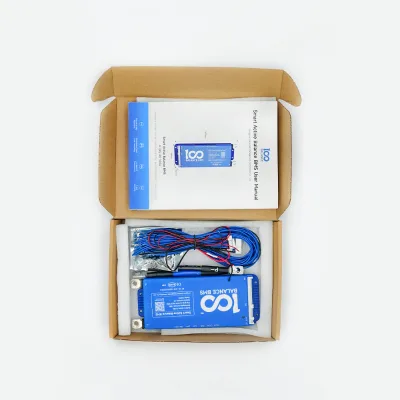
A critical technical differentiator is the "Smart BMS." Unlike passive protection circuits, a smart BMS actively monitors cell voltage, temperature, and current flow in real-time. The supplied data highlights specific connectivity options such as Bluetooth, RS485, and monitoring interfaces. These features allow for remote diagnostics and integration into larger energy management systems. Buyers should verify that the BMS supports both series and parallel connections, as this flexibility is essential for scaling capacity. For instance, a 48V system with a capacity of 100Ah or 700Ah requires a BMS capable of balancing cells across a large number of series-connected modules to prevent premature failure.
The discharge rate is another vital parameter. Market observations show a range from low to high discharge rates depending on the application. Systems designed for solar energy storage typically feature medium discharge rates, while those intended for electric vehicles or remote control models may require high discharge capabilities, sometimes up to 3C continuous discharge. The electrolyte type is consistently identified as Li-ion in the context of these packs, though the specific cathode material (LFP) provides the safety profile. Buyers must ensure the discharge rate matches the peak load requirements of their intended application to avoid voltage sag or thermal runaway.
Compliance, Certification, and Safety Standards
Safety and regulatory compliance are non-negotiable in the battery industry. While specific certification marks like CE or UL 9540 are often cited in broader market discussions, procurement teams must verify the actual status of these certifications for the specific batch or model being purchased. The supplied data references "LiFePO4" as a standard product attribute, which implies adherence to specific chemical safety norms, but this does not automatically equate to third-party safety certification for the final assembled pack.
Buyers should demand proof of compliance with international safety standards relevant to their region. For example, if the product is destined for the European market, CE marking verification is mandatory. For the North American market, UL standards such as UL 9540 for energy storage systems are critical. The absence of a specific certification claim in the product listing does not imply non-compliance, but it necessitates a rigorous request for documentation from the supplier. The "Smart BMS" feature often includes over-charge, over-discharge, and short-circuit protection, which are baseline requirements for any certified product.
Furthermore, the physical construction of the battery pack must align with safety standards. The observed packaging methods, such as paper cartons with wooden pallets or standard shipping containers, suggest logistics considerations that must meet international shipping regulations for hazardous materials (UN38.3). Buyers should confirm that the supplier has a documented process for testing each pack before shipment, ensuring that the internal BMS and cell balance meet the declared specifications.
Cost Drivers and Pricing Dynamics
The price of a smart BMS LiFePO4 battery pack is influenced by several variables, including capacity, voltage, and the level of intelligence embedded in the BMS. The observed price range in the market spans from $1 to $4,150 USD, reflecting the vast diversity of products from small 12V hobbyist packs to large 48V/700Ah industrial storage units. This wide range indicates that price cannot be used as a sole indicator of quality; a low-cost unit may lack the necessary BMS intelligence or cell quality for critical applications.
Capacity is the primary cost driver. A 48V 100Ah pack will cost significantly less than a 48V 700Ah unit, even if the BMS technology is similar. The "Nominal Capacity" observed in the data ranges from 60Ah to 700Ah, with customization options available. Buyers should calculate the total cost of ownership rather than just the upfront price. A higher initial cost for a pack with a 3000+ cycle life warranty may result in lower long-term costs compared to a cheaper unit with a shorter lifespan.
The Minimum Order Quantity (MOQ) also impacts the effective unit cost. The observed MOQ range is 1 to 500 units. Small buyers may face higher per-unit costs due to the lack of economies of scale, while large procurement projects can negotiate better pricing by meeting higher MOQ thresholds. Customization options, such as specific voltage configurations or BMS communication protocols, often incur additional costs and may increase the MOQ. Buyers must balance their immediate needs with the potential for future scalability to optimize their investment.
Typical Applications and Usage Scenarios
The versatility of LiFePO4 battery packs allows them to serve a wide array of applications, from renewable energy storage to transportation. The data indicates usage in solar systems, UPS (Uninterruptible Power Supply), lighting, and various electric vehicles including cars, buses, boats, and electric bicycles. The specific configuration of the battery pack must align with the demands of the application.
For solar energy storage, the 48V/51.2V nominal voltage is the industry standard. These systems require high capacity, often exceeding 100Ah, to store energy generated during the day for use at night. The "Medium Discharge Rate" observed in these units is sufficient for typical household or commercial loads. The ability to connect in series and parallel is crucial for expanding the storage capacity of solar installations.
In the transportation sector, the requirements shift towards higher discharge rates and compact form factors. Units used in remote control cars, planes, and boats often feature smaller capacities like 20.8Ah or 100Ah but require high discharge capabilities to handle rapid acceleration. The "High Discharge" feature noted in some listings is essential for these dynamic applications. For industrial UPS and lighting applications, reliability and long cycle life are paramount. A 5-year warranty is a common offering for these critical systems, reflecting the expected durability of the LiFePO4 chemistry.
Supplier Evaluation and Verification
Selecting the right supplier is as important as selecting the right product. The supply chain for battery packs is complex, involving cell manufacturers, BMS developers, and pack assemblers. The data shows that production origins are primarily in Guangdong and Shenzhen, China, which are major hubs for battery manufacturing. However, the presence of a manufacturing location does not guarantee quality.
Buyers should evaluate suppliers based on their technical transparency and customization capabilities. The availability of OEM (Original Equipment Manufacturer) and ODM (Original Design Manufacturer) services indicates a supplier's ability to tailor products to specific needs. Suppliers that offer "Customization" for capacity, voltage, and BMS features are generally more reliable for specialized projects. The "Smart BMS" attribute should be verified through sample testing to ensure the communication protocols (Bluetooth, RS485) function correctly with the buyer's existing infrastructure.
Quality control processes are another key evaluation metric. Suppliers should provide detailed information about their testing procedures, including cell balancing, insulation resistance testing, and cycle life testing. The "Life Cycle 3000+ Times" claim observed in the data is a significant indicator of quality, but it must be backed by test reports. Buyers should request third-party test results or internal quality assurance documentation before placing large orders.
Quality Control and Long-Term Procurement
Ensuring the long-term performance of LiFePO4 battery packs requires a robust quality control strategy. The "Fixed" installation method observed in the data suggests that these units are designed for permanent or semi-permanent setups, where maintenance access may be limited. Therefore, the initial quality must be high to prevent costly replacements.
Buyers should implement a rigorous incoming quality control (IQC) process. This includes verifying the physical dimensions, such as the standard sizes of 522238220mm or 10001200600mm, and checking the packaging integrity. The "Paper Carton with Wooden Pallet" or "Carton or Pallet" packaging must be sufficient to protect the units during transit. Any damage to the casing or BMS connectors can compromise the safety and performance of the battery.
Long-term procurement considerations also involve the warranty and support structure. The observed warranty periods range from 3 to 5 years. A 5-year warranty on a solar storage system is a strong indicator of the supplier's confidence in their product. Buyers should ensure that the warranty covers not just the cells but also the BMS and the overall system performance. Additionally, the availability of spare parts and technical support is crucial for maintaining the system over its lifecycle.
Conclusion
Sourcing smart BMS LiFePO4 battery packs is a complex process that requires careful attention to technical specifications, compliance, and supplier reliability. The market offers a wide range of products, from small 12V units to large 48V/700Ah solar storage systems, each with unique requirements. By focusing on the core attributes of cell chemistry, BMS intelligence, and application-specific performance, buyers can make informed decisions that ensure safety and efficiency. The observed data highlights the importance of verifying certifications, understanding cost drivers, and evaluating supplier capabilities. Ultimately, a disciplined approach to procurement will lead to the selection of high-quality battery packs that meet the demanding needs of modern energy and transportation applications.
FAQs
What is the nominal voltage for these battery packs?
The nominal voltage is typically 48V or 51.2V for large units. Smaller models may operate at 12V or 24V depending on the specific application requirements.
Can I customize the capacity of the battery pack?
Yes, customization is available for capacity and voltage configurations. Buyers can request specific capacities ranging from 60Ah up to 700Ah to match their energy needs.
Which discharge rates are available for different applications?
Discharge rates vary from low to high depending on the use case. Solar systems often use medium rates, while remote control vehicles may require high discharge capabilities up to 3C.
How long is the warranty period for these lithium batteries?
Warranty periods typically range from 3 to 5 years. A 5-year warranty is common for solar energy storage systems, reflecting the expected durability of the LiFePO4 chemistry.
What are the standard dimensions for the product packaging?
Standard sizes include 522*238*220mm and 1000*1200*600mm. Packaging usually consists of paper cartons with wooden pallets or standard shipping containers for protection.
Can the battery pack be connected in series and parallel?
Yes, the connection mode supports both series and parallel configurations. This flexibility allows users to scale capacity and voltage for larger solar or industrial installations.
Where are these battery packs manufactured?
Manufacturing origins are primarily located in Guangdong and Shenzhen, China. These regions are major hubs for battery production and offer various customization options.